
Recently, it seems that everyone is always discussing Artificial Intelligence, and it’s clear that AI is more than a passing fad. As technology advances, artificial intelligence for small business success is gradually becoming an essential component of our daily lives. There’s no point in dismissing its ability to make otherwise difficult activities easier, and for small businesses, integrating AI can be a game-changer, unlocking new avenues for efficiency, growth, and success.
Artificial intelligence and small business. Is it a match?
Since the major breakthrough of ChatGPT and Midjourney, there have been numerous discussions concerning their use in creative industries such as graphic design and copywriting. Some believe AI technology will eliminate jobs and essentially disrupt the labour market. Others see it as another threat in the uneven fight against fake news.
Although many of those conversations are very fair, and AI-powered solutions might raise legitimate concerns. However, if you own a tiny firm, don’t let this discussion terrify you.
Running a business as a solopreneur or small business owner is extremely challenging. Taking on this challenge requires a great deal of guts. AI can be your most steadfast ally in this quest for success. Without having to hire more people, rent an office space, and invest more money, you may have a professional, trained assistant using an AI algorithm to assist you with whatever you may require an extra hand. Or brain in this case. So Artificial Intelligence and small business. Is it a match? yes it is.
Artificial Intelligence for Small Business 101
Before we go into use cases and tools, it’s important to understand what we’re talking about when we mention artificial intelligence.
Don’t worry, you can comprehend AI in a matter of minutes, regardless of your background. That’s because you don’t have to know everything about AI to start using it. You only need to know a few basics…
First, you must understand that when we say “artificial intelligence,” we are not referring to a specific technology. AI is an umbrella word that refers to a wide range of technologies with differing levels of maturity. We call numerous very different tools “AI” in the same way that we call many very different technologies “software.”
However, the term artificial intelligence has meaning. It’s how we show that a technology is distinct from—and smarter than—the typical software you use today.
Second, you must comprehend how AI differs and outperforms the software you already use. It all boils down to “machine learning.” Machine learning is a subset of AI, and it is the technology that provides the majority of AI’s capabilities.
Machine learning refers to AI’s ability to learn and improve on its own. Human specialists train data-driven AI tools. It learns how to attain a specific outcome based on the facts. Then it is given fresh data and allowed to apply what it learns to reach the desired result on its own. Over time, the AI tool can reflect on its previous actions and learn from them, allowing it to enhance its future outcomes.
Finally, it’s crucial to recognize that you can begin your AI journey today. You don’t require a background in data science, nor do you need to be a machine learning engineer or software developer, or have such professionals on your team. All you need are business challenges you aim to address or opportunities you want to capitalize on.
And, truth be told, we all encounter those challenges and opportunities in our businesses, don’t we? Now, let’s explore how AI can be a valuable asset for small businesses.
Benefits of AI Tools for Small Busines
The specific benefits vary depending on the AI technology you choose to utilise. While I will demonstrate a variety of AI tools and use cases, I would like to focus on the benefits of AI tools for small business.
Small businesses can use AI within Sales CRMs to automate lead scoring, track customer interactions, and provide personalised communication. It streamlines sales and marketing activities while strengthening customer relationships.
Cost-effectiveness
Numerous AI tools are accessible at reasonable prices or through subscription models, making them within reach for small businesses operating on tight budgets. Furthermore, by implementing AI to automate tasks and processes, you can cut down on extra labor costs and minimize the risk of errors. With a modest investment, you can bring about significant enhancements in your business processes and operations.
Time-saving
The concept is straightforward but worth emphasizing. AI alleviates the burden of numerous tasks, whether you fully delegate work to AI or collaborate with it. The outcomes are delivered swiftly, providing you with more time for other priorities.
Scalability
AI solutions often offer the flexibility to scale up or down based on your requirements, enabling you to adjust to evolving demands without substantial initial expenses. If your business expands, simply acquire another tier of your preferred AI tool—it’s that straightforward and, once again, economically viable.
Types of AI Tools for Small Business
Artificial intelligence can be useful in a variety of ways. The landscape of tools that make use of these abilities is already quite saturated and constantly expanding. Let’s discover the various types of AI tools for small business below:
Chatbots and virtual assistants
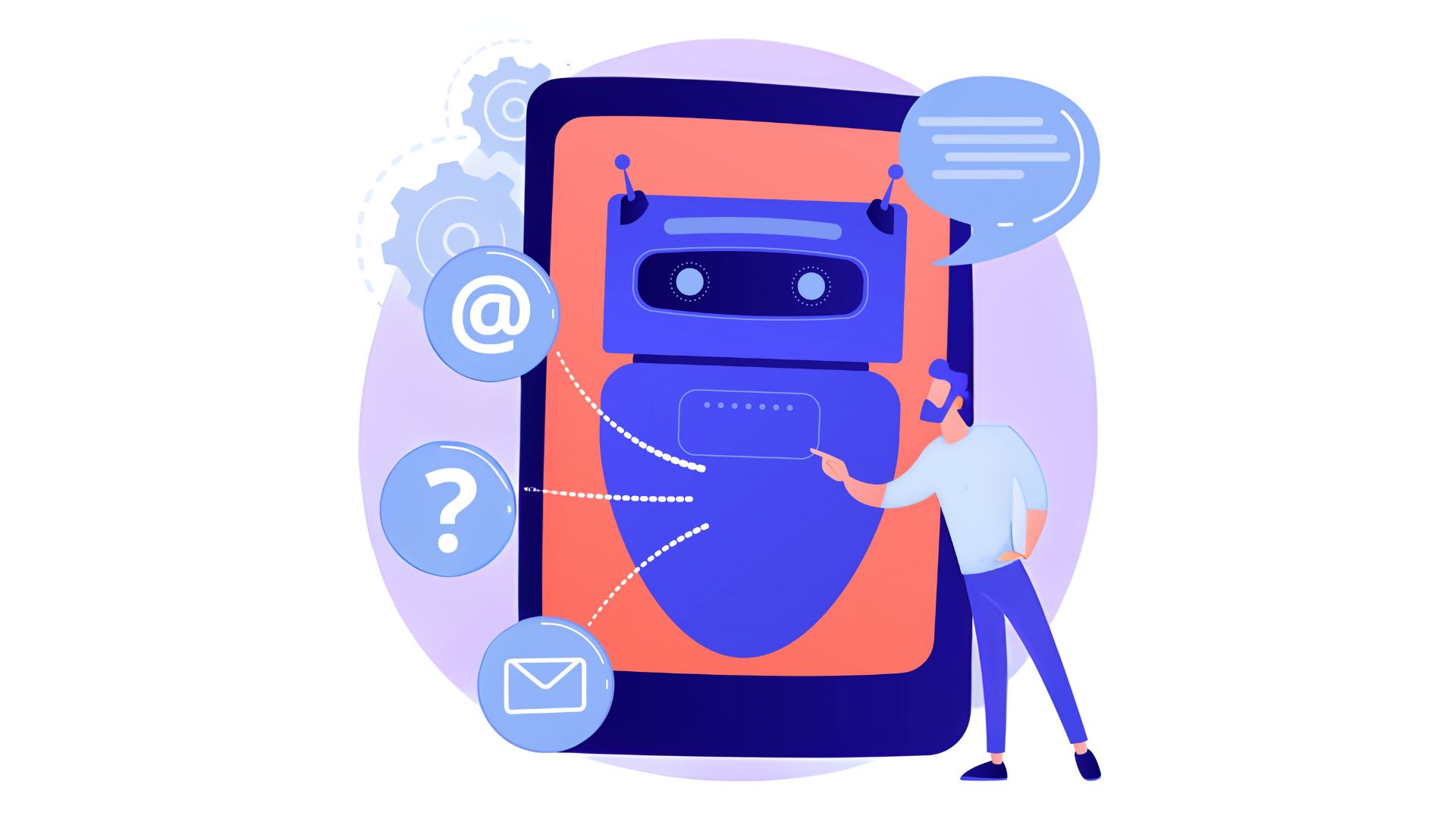
Chatbots and virtual assistants driven by AI have the capability to interact with customers around the clock, addressing commonly asked questions, providing product recommendations, and even facilitating order processing. They elevate customer support, resulting in time savings for both customers and your team.
Customer Relationship Management (CRM) systems
As a small business, you may use AI in CRMs to automate lead scoring, track customer interactions, and deliver personalised communication. It streamlines sales and marketing activities while strengthening customer relationships.
Email marketing automation
From analysing subscriber behaviour to automating responses, personalised emails, product recommendations based on previous purchases, and optimising email scheduling for improved open and click-through rates. AI can handle it everything. It not only saves time, but also enables you to make data-driven decisions.
Sales and marketing automation
Artificial intelligence automates lead creation by detecting new clients, nurturing leads, and personalising marketing content. It streamlines the sales process and increases conversion rates. When combined with chatbots and email marketing automation, you get a well-thought-out procedure for converting potential clients into customers.
Financial management
Use AI to automate data entry, expense tracking, and financial analysis. It ensures financial accuracy and provides insights into cost-reduction opportunities. Tools like that make it easier for small businesses to manage their finances and make their tight budgets work.
HR and recruitment
While AI tools are intended to alleviate the need for hiring additional personnel in businesses, it may not always be the optimal solution. Nevertheless, they can still be relied upon in the hiring process. Utilize HRIS software powered by AI to screen resumes, conduct initial interviews, and identify top candidates based on predetermined criteria.
Content creation and marketing
The use of AI-generated content and tools for scheduling on social media can enhance marketing endeavors by generating compelling content, overseeing posting schedules, and analyzing audience engagement. Social media management and the overall execution of marketing campaigns have become more straightforward than ever.
Language translation
AI-powered translation tools eliminate language barriers, empowering small businesses to connect with a global audience, broaden their market reach, and improve customer engagement. Whether integrated into your AI writing assistant or used as a standalone tool, artificial intelligence tools alleviate concerns about language proficiency.
Ecommerce optimization
AI fine-tunes pricing strategies, provides individualized product suggestions, and improves the online shopping experience, resulting in heightened customer satisfaction, increased sales, and ultimately contributing to the growth of your business
Challenges and Considerations for Small Businesses Adopting AI
Embracing AI in a small business setting presents both exciting opportunities and noteworthy challenges. The benefits of AI, such as cost-efficiency, time-saving, and scalability, can significantly enhance various aspects of business operations. For instance, AI-driven chatbots and virtual assistants can revolutionize customer support by engaging with clients 24/7, answering queries, and expediting order processing. Similarly, AI-generated content and social media scheduling tools streamline marketing efforts, making content creation, posting schedules, and audience engagement analysis more efficient.
However, certain challenges and considerations for small businesses adopting AI emerge.
Misconception about AI replacing human resources
One significant challenge in adopting AI for small businesses is the potential misconception that AI can fully replace human resources. While AI offers efficiency and automation, it’s crucial to recognize that certain tasks and decision-making processes may still require the nuanced touch of human expertise.
Language barriers and AI-driven translation tools
Despite the advancements in AI-driven translation tools, language barriers persist, particularly for small businesses looking to engage with a global audience.It’s essential to understand that AI translation tools don’t eliminate the need for language proficiency. Recognizing and addressing cultural nuances remain crucial for effective communication in diverse linguistic environments.
AI in pricing strategies
Integrating AI into pricing strategies brings the challenge of potential risks without human oversight. Overreliance on AI in pricing decisions could lead to suboptimal outcomes. Businesses need to navigate the delicate balance between competitiveness and profitability. Ensuring there is human oversight in pricing decisions is crucial for making strategic and sustainable choices.
Privacy and Data Security in AI-Driven Recommendations
As businesses adopt AI for personalized product recommendations, concerns related to privacy and data security arise. Implementing robust measures to protect customer data is essential. Maintaining transparent and secure AI-driven personalization initiatives is critical for preserving customer trust in the face of privacy concerns.
Future Trends in AI for Small Businesses
As we peer into the future, the winds of change carry whispers of innovation, driven by the anticipation of what lies ahead in the realm of artificial intelligence. In the dynamic dance of digital transformation, emerging future trends in AI for small businesses promise to redefine the very essence of how small enterprises operate.
AI Integration into Routine Tasks
In the future, small businesses will seamlessly integrate AI into routine tasks, automating processes such as data entry, invoicing, and inventory management. This integration allows for more efficient use of resources, freeing up time for employees to focus on higher-value tasks that require human creativity and critical thinking.
Enhanced Customer Personalization
The future holds a significant emphasis on enhanced customer personalization through AI. Small businesses will leverage AI algorithms to analyze customer behavior, preferences, and purchase history, allowing for the delivery of more personalized products, services, and marketing messages. This tailored approach not only increases customer satisfaction but also fosters stronger customer loyalty.
Increased Reliance on AI Analytics
Small businesses will increasingly rely on AI analytics to extract meaningful insights from vast datasets. AI-driven analytics tools will enable businesses to make data-driven decisions, optimize operations, and gain a competitive edge. The accessibility of advanced analytics will empower small enterprises to compete with larger counterparts in terms of informed decision-making.
Growth of AI-driven Cybersecurity Solutions
As the digital landscape evolves, small businesses will witness a surge in the adoption of AI-driven cybersecurity solutions. AI algorithms will play a crucial role in identifying and preventing cyber threats, providing a more proactive and adaptive defense against evolving security challenges. This growth in AI-driven cybersecurity will be essential in safeguarding sensitive business data and maintaining customer trust in an increasingly digital business environment.
4 Steps to Get Started with Artificial Intelligence for Small Business
Here are some strategies to help you quickly identify a use case for AI in your business.
Make a list of everything you do
Make a list of all the tasks for which you are accountable on any given day, week, month, or quarter. Include tasks of varying sizes.
Give each task a time estimate
Next to each task, write down how long you believe it takes on average. No need to overthink this; simply make your best guess. This is how long the task will take within the time limit you’ve specified. If you’re listing daily duties, it’s the amount of time it takes per day.
Rank the list
Organize your list by arranging tasks in descending order based on their time estimates, starting from the most time-consuming task and concluding with the shortest.
Prioritize the top three tasks
These tasks serve as initial opportunities for integrating AI. AI can be employed to enhance their efficiency, resulting in significant time savings. Alternatively, AI can be utilized to optimize their outcomes, ensuring a higher return on the invested time.
Contact us today to unlock the potential of AI for your business.