
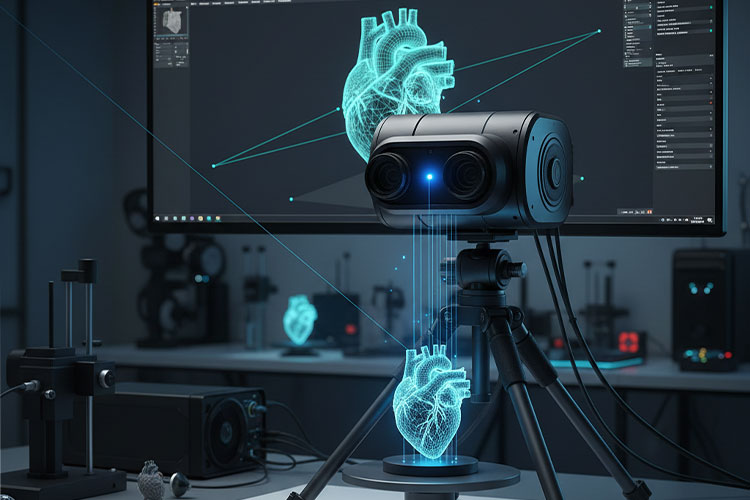
To choose the right 3D printer scanner for your needs, you first need to know what you want to scan. The best 3D scanner for small, detailed models may not be the best one for larger objects. The final results will be very different if you know the size, type of surface, and resolution you want. When you make the right choice, scans are easier to use in 3D printing processes.
Table of Contents:
Different scanners are better at handling different shapes and materials. Some do well on shiny or dark surfaces, while others have a hard time. The right scanner makes sure that digitizing complicated parts or existing prototypes is accurate and requires less cleanup. Choosing carefully saves time and makes things better.
A Comparison Of 3D Printer Scanner Types
There are many different capture styles and tools to choose from when looking into 3D printer scanners. Photogrammetry builds a 3D model from photos, while laser-based scanners trace objects with great accuracy. Each method of 3D scanning technologies has its own pros and cons that affect how deep, fast, and easy it is to use.
Laser systems often work better for small parts and mechanical pieces. Photogrammetry can be cheaper, but it may take longer to process. Knowing how each method works helps you guess how good and useful the final model will be for 3D printing.
Finding The Right Tools For Your Project
It depends on what you want to do with the scans to find the best 3D scanner for your needs. Resolution and point density are the most important things to look for if you want very detailed figures or parts of a product. Scanners that pick up fine details make it easier to edit and print later.
You need to do things differently for bigger things like furniture or whole rooms. Some scanners give up detail in exchange for more coverage. By setting your priorities early, you can choose a scanner that strikes a balance between size and accuracy without sacrificing either.
Scanning In Workplaces
Experts often use advanced 3D scanning technologies to get details about buildings and factories. These tools give you accurate results even when things are hard. Professionals use scanners that can handle complicated surfaces and environments when they need to make precise measurements.
Accuracy is what makes things work in fields like design, restoration, and quality control. Scans are used as reference points for digital archives or changes. Before you start editing or 3D printing, you need to get the right structure and proportions.
Specialized Options For Architecture And Building
Architecture 3D scanning Malaysia is a great way to capture buildings or big spaces. Architects and planners can see environments digitally with scanners that cover large areas while keeping detail. This is especially important for planning renovations and doing virtual walkthroughs.
Large-scale scanning needs to be accurate and stable, whether it’s measuring the outside or the inside of a building. Models will show real-world proportions if you plan ahead, choose the right scanner, and process the data correctly. These digital assets help you talk to clients more clearly and make decisions with confidence.
Scan With Trust
Before you can choose the right scanner, you need to know what you want to do with it, whether it’s getting fine details or a wide range. Every project, from small prototypes to big buildings like in architecture 3D scanning Malaysia, needs careful consideration of the 3D scanning technologies and the best 3D scanner for your application. The right tools make you work faster and help you get better 3D printed results.
Reach out to us if you’re ready to find the right scanner for your next project. We’ll work together to make scanning easy and useful.