
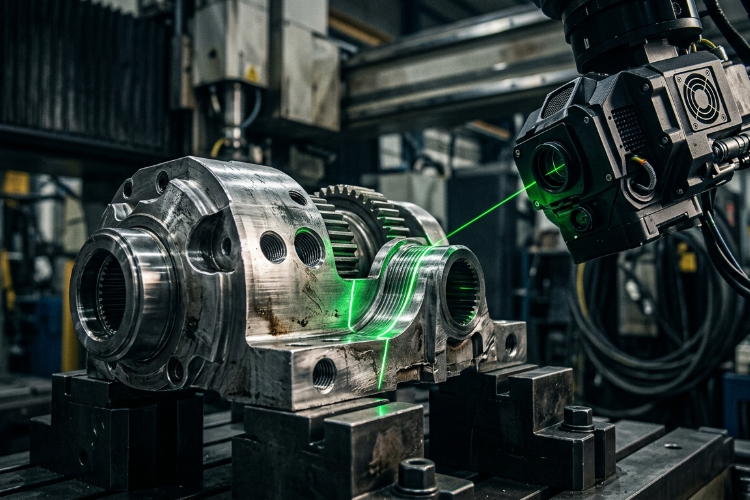
Factories started using industrial 3D Scanning just to copy and check items faster. With sharp accuracy, these tools grab every detail without slowing things down. Costs dip when machines handle checks instead of people doing it by hand. Quality goes up since tiny flaws get caught early. Because measurements stay consistent, mistakes happen less often.
Here are some industries that regularly use industrial Architecture 3D scanning in Malaysia.
Medical Industry
Tiny tools or intricate body implants – both rely on precise digital scans during creation. Because regulations demand strict oversight, having certified experts handle scanning adds trust in results. Instead of guessing measurements by hand, specialists capture exact shapes through light-based mapping. Whether fixing legacy gear or checking new parts, teams turn to outside pros who follow official standards.
Accuracy matters most when lives depend on how well something fits or works. With every scan, there’s a record showing exactly what was built and how it matches design rules.
One clear case of a medical part needing FDA clearance is the Luer. This tiny connector links equipment tightly so fluids do not escape. Instead of guessing, makers check these pieces using industrial 3D Scanning For Dental Malaysia. When flaws show up, adjustments follow – always aiming to meet ISO 80369-7 rules. Scanning helps catch differences early, before production moves forward.
Automotive
Cars get checked and fixed easier when factories use 3D Scanning Machine Malaysia instead of old methods. One part breaks, another fills its place – scanning helps match it perfectly. Old pieces vanish over time, yet copies appear through digital mapping. Companies build new versions without original blueprints by tracing shapes in space. Scanned models turn into plans engineers adjust on screens before making metal. Different suppliers send parts that must fit – even small flaws show up fast this way. Machines catch tiny differences between what exists and what design intended. Problems hide inside complex systems until a full scan lights them up clearly. Repairs move quicker once exact dimensions guide each step forward.
Factories compare real objects to ideal forms using point clouds from lasers. Missing components come back to life through precise surface recordings. Designers tweak virtual versions after studying how things actually sit together. Each piece tells a story about wear, stress, or mismatch when scanned closely. What looked fine may fail under inspection only tech reveals slowly. Copying something physical begins with spinning beams across every curve.
These days, Industrial 3D Scanning is turning into go-to helpers for people building electric car batteries, handing over crucial details needed when things go wrong. With sharp precision and consistent results, scanning in three dimensions – paired with what happens after the scan – is able to map out key points like:
1. Overhang measurements
2. Jelly roll distances
3. Weld quality
4. Torn anodes
5. Contaminate identification
6. Stack alignments
7. Connector corrosion
8.Cracks, folds, pores
Aerospace
Precision matters more here than almost anywhere else when it comes to building machines that fly. Across continents, firms turn to 3D scanning tech to map every curve of airplane pieces. These digital copies guide creators through updates and fixes while cutting down extra rounds of changes. With exact measurements in hand, teams spot weaknesses before they grow serious, simplify upkeep tasks, sometimes even boost how well things run. Scans catch tiny cracks near a screw head just as easily as issues across wide sections – details that matter deeply once airborne. When plans shift slightly from what was first drawn, comparing scans against old blueprints shows exactly where differences appear.
Consumer Goods
Out in the world of everyday products, speed matters more than ever. Instead of waiting weeks, companies turn to 3D scanning for molds and tools – getting things right before full runs start. Right at the beginning, checking that first sample sets the tone for everything after. Measurements come alive through images, numbers, and charts, giving clarity on whether tweaks are needed – or if it’s time to move forward.
Out of nowhere, 3D scans help consumer brands build prototypes fast. Because precision matters, these scans detect color-based differences across surfaces. When items move through assembly, snapshots at each phase show where reality drifts from blueprint. With that info in hand, fixes happen before problems spread
Buildings And Structures
Buildings start differently now. Instead of just drawings, many teams reach for printers that shape objects layer by layer. These tools sketch ideas in physical form long before ground breaking occurs. Models appear overnight – small versions of towers, bridges, even rooms – crafted precisely through digital guidance. Designers spot problems early when they can hold a prototype in their hands. Ideas flow better between planners and builders once everyone sees the same tangible version. Time shrinks too; waiting fades as adjustments happen swiftly on screens and in printouts.
Waste drops sharply because only needed materials get used. Custom parts fit perfectly since each piece molds exactly to its role. City layouts take shape digitally, tested under virtual conditions prior to any build. Real estate visions gain clarity without costly mockups first. Inside buildings, unique features emerge easily – from railings to panels – all shaped through guided extrusion. Testing structures becomes safer when replicas bear loads instead of full-scale experiments. This shift sticks around, quietly reshaping how spaces come to life.
Scanning objects in three dimensions makes checking things faster, cheaper. Because of that, businesses manage costs while keeping what they sell reliable. Some makers take old items off the shelf – even ones rivals built – then map their shapes carefully. Machines capture every curve so copies get made without original plans around
What makes us different? We build tailored 3D scans that solve real problems in how products are made. While others stick to standard methods, we adjust every detail to fit your needs. Got questions? Connect with us. Because one-size-fits-all rarely fits anyone.