
Mixed Reality in Workplaces Five Real Uses
Screens might just appear – thanks to glasses or headsets making it happen. Instead of flat displays, imagine info floating right where you look, no monitor required. Virtual setups let users step into new worlds, while augmented ones slide data over real life. Yet when digital pieces act like they belong in your room, responding to walls or furniture – that is Mixed Reality at work. These gadgets blur what is real and what is built, one illusion at a time.
A tool like this fits into more than just work life – think offices, factories, even training rooms. This piece looks at Mixed Reality Game Malaysia not as a trend but as something that might quietly redefine how people do their jobs tomorrow.
Creating Mixed Reality Experiences
Eye coverings built into certain headsets make Mixed Reality Apps Malaysia possible by capturing real-world visuals before showing them back enhanced with digital layers. Instead of blocking everything, these devices take in surroundings and replay them through screens inside the unit. Sometimes the live view stays dominant, sometimes it vanishes entirely – replaced fully by computer-generated scenes capable of mimicking VR. What you experience depends on whether the original footage remains visible or gets swapped out altogether.
Mixed Reality Portal Malaysia can also work by using goggles, as seen with Hololens, Meta, or Magic Leap (and maybe even glasses in the future) that don’t completely cover users’ eyes.
Yet only seeing a small part of digital info can cause problems for simpler gadgets. These glasses let workers see real surroundings right through the front, while slipping extra details onto the surface or shining images straight at the eyes.
Every day brings small gains, even if performance still shifts unpredictably across makers. Because life in so many corners could shift, thinking ahead helps clarify where it might fit most naturally.
The Opportunity For Mixed Reality In The Future Workplace
Among desks and meetings, mixed reality slips into daily tasks through live digital layers. Because it follows movement and responds to actual surroundings plus hand signals, this tech fits right into spaces where people handle data all day. Not just floating images – it ties into how workers show, sort, and share what they know. From one glance to the next, it changes how details appear and move around a room.
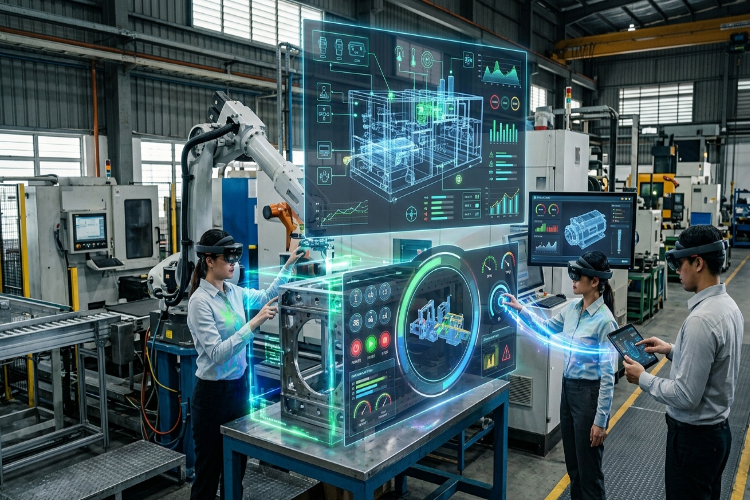
Five ways mixed reality could change how we work ahead. Using Mixed Reality In Healthcare Malaysia, A doctor practices surgery using a lifelike simulation before stepping into the operating room. Instead of guessing, factory workers see digital overlays guiding each repair step by step. Remote teammates appear as holograms during meetings, making distance feel smaller. Training becomes hands on without risk when employees interact with virtual equipment. Complex data springs to life in 3D space so decisions form faster.
1. Computing experience and multiple screens
Bulky headsets might fade as sleeker mixed reality gear frees employees from deskbound screens. Instead of staring at monitors, folks could interact with digital layers folded right into their surroundings. A fresh wave of spatial tools lets teams work beyond flat displays. This shift nudges offices toward fluid setups where space bends to tasks. Not tomorrow – soon – workers may navigate data while standing, walking, even reaching through holograms. Physical desks won’t vanish, yet what they anchor is changing. Computing slips off the table, floats up, then wraps around people.
Microsoft CEO, Satya Nadella, agrees and says “the ultimate computer for me is the mixed reality world.” He adds, “Your field of view becomes an infinite display. You see the world and in the world you see virtual objects and holograms.”
Imagine working inside a room where screens float like pieces of paper caught midair. One might hover near your shoulder, another stretch wide at arm’s length, while a third sits just above eye level. Screens appear wherever you need them, shaped how you want – tall, narrow, broad, small. Move one forward with a glance or push it aside using a flick of the wrist. Each adjusts down to the inch, matching how far or close you prefer to see things. Some sit high, others low; none glued into fixed spots. Remove any that clutter view simply by swiping them into nothing. Custom fit matters less now – the setup fits you, not the other way around.
Standing at these stations, screen limits fade when monitors rise beyond desk height. Because movement flows easier, eyes stay level while hands glide across surfaces. Posture shifts subtly better each hour spent working here. Comfort grows without effort piling up through the day. A workspace like this feels lighter on the body over time.
2. Enhancing presentations
Wherever you want a digital display, it can appear – thanks to tech that shifts how presentation visuals work. When people wear special eyewear or headgear, needing a projector, pale wall, or bright surface fades away. It simply isn’t required every time anymore.
Someone might see the presentation through glasses while leaning back on a chair. A worker could set up a screen that floats midair, just past arm’s reach. Maybe it sticks to a wall like paper pinned by magnets. Some folks adjust size with fingers spread wide or close together. Others find their view blocked only until they shift it above a desk lamp. Sitting too far left once caused strain, but now eyes move freely across content placed at eye level. Neck pain fades when screens follow where people look.
A different kind of experience takes shape over time when mixing real and digital views. Instead of a flat monitor, the speaker sends a moving image of slides into each person’s headset, pinned like a poster on an invisible surface – or just floating free. This view follows motion, staying aligned as people move around. With fingers raised, gestures guide attention across elements, drawing circles or lines directly onto what others see. Objects in the layout shift position when touched through hand motions, giving depth to interactions that feel immediate.
Right where someone picks to stand, tiny slide displays show up nearby. Because of that, talks or gatherings can happen even when there is no wall or big projector around. Each moment feels sharper, somehow quieter, as details unfold one by one.
3. Employee training and 3D model interaction
Out there, where real meets digital, people learn by doing without touching anything real. Medicine, building machines, crafting gadgets – each needs practice that hurts if done wrong. Enter a space between worlds, one where mistakes cost nothing yet teach everything. Some tough lessons now live inside headsets instead of operating rooms. Training shifts shape when screens breathe like life. Risk slips away as simulation takes its place. Not every skill demands sweat and stress anymore.
Imagine moving through training inside a lifelike digital space – more useful than just viewing clips on screen. Workers try tasks over again, even when mistakes happen, with nothing real getting damaged. Picture stepping into situations that feel genuine yet carry no risk of breaking equipment. Practice can go on as long as needed, one round after another without limit. Think of classroom lessons gaining strength from these immersive moments, building skills alongside hands-on drills.
How VR trains people works much like before, yet shows clear benefits across several job settings. Instead of just viewing screens, workers interact with shapes in three dimensions while staying aware of where they actually stand. Picture this – mixed reality blends digital objects into your actual room using a headset’s camera feed. Or imagine see-through lenses on glasses bringing computer images right into the space around you. What stands out is how the world you’re in becomes part of the display itself.
A lifelike 3D copy of the training space must first exist for the VR setup to work. Because immersion matters, every object inside needs careful digital recreation. Instead of real people, virtual stand-ins take their place – each built with enough detail to feel present. For everything to sync, these figures move based on how users interact. Without precise modeling, the illusion breaks fast.
Most times, mixed reality feeds data right into the person’s visual space without extra steps, making practice feel close to actual situations. Should the need arise for a fully digital setting, devices able to block out physical surroundings entirely deliver users into simulated worlds – much like what occurs in VR setups.
4. Spatial data visualizations and aided execution
Seeing data come alive in three dimensions happens when people wear mixed reality devices. A worker might share a chart right inside another person’s field of vision without warning. Studying shifts in land height over time becomes possible through moving images that hang steady in space. Digital shapes stick to physical surfaces because the system understands where things actually sit. These displays appear on desks, rest against walls, float between hands, adapting as surroundings shift.
Showing information like this gains value once shaped into a 3D model. Think about teams working together on a detailed image of the human body – instead of flat drawings, they explore depth, rotate views, while discussing findings live. A shared digital environment lets them touch parts, zoom in, adjust angles – all at once, across distances.
In addition to deriving insights from spatial visualizations of data, mixed reality also allows workers to follow visual guides in order to execute tasks.
Some tasks get easier when people see digital images matched to real objects they are checking or fixing. Take factory staff – they might watch step by step visuals appear right on a machine part, guiding their hands without guesswork. Sometimes it’s engineers who gain clarity, other times repair techs move faster because directions seem to sit where they need them.
5. Customize the workplace environment
One day, people might change how their office looks using mixed reality. Headsets track movement, so digital items move with you. Instead of paint, solid colors appear on walls – like big flat shapes floating nearby. These forms stay put when you walk past them. Another option brings in full 3D things, such as fake plants or lights. Workers could try different versions before choosing one. What you see fits right into your real space. Each object moves just like a physical thing would. Some may prefer subtle touches; others go bold. The view shifts naturally as you turn around. It feels less like decoration, more like reimagining the room itself.
One worker might pick a quiet forest today, then switch to a rooftop at sunset tomorrow. A screen blocking out the real world lets them step into different three-dimensional spaces where tasks get done differently each time. Mood shifts bring new backdrops. The look around them changes as often as their thoughts do.
Windows line every row, while some place you right among sand dunes, peaks, or open meadows. Built into this setup, light shifts to match your rhythm – sometimes bright, sometimes soft – with layers of seclusion that appear when needed.
Hidden spaces can rise up at any moment, shaping zones where people drift between being seen or unseen. When someone nearby might be slipping into their own quiet bubble, it shifts how we sense shared space. A signal could appear, soft and unobtrusive, showing if a coworker is tucked inside a digital room or standing right there in the actual one.
One thing’s certain: focusing on surroundings shouldn’t slow down tasks or weaken team links. Workers might find themselves inside a common digital space, shaped by personal tweaks yet still linked at the core. Where someone sits in actual life won’t matter – presence stays intact, built through tech that holds everyone together even when miles pull them apart.
Looking Forward
Right now, pieces of this tech feel nearer than the rest. Already, digital layers follow along with what we see around us. Moving forward, the challenge shifts toward making mixed reality gear sharp enough to keep up, no matter the workspace.
After that comes adjusting how thick the digital layers look, so they seem more like real objects instead of faint projections. One thing matters: making them respond exactly when we move our hands near them. Touchless control needs to feel natural, almost like pushing actual buttons in midair. The image must hold steady, not flicker or fade during motion. Clarity builds trust in what we see floating there. Each shift in finger position should change the display smoothly. What looks solid now has to act solid too. Get in reach with us to discuss your company’s actual search visibility demands.
Eventually, mixed reality can reach stability only if those improvements actually happen. Without them, practical business uses might never take off. Progress depends on better tech working quietly behind the scenes. Stability won’t appear overnight. Real function grows slowly, step by step, shaped by real needs instead of hype. Only then will daily operations trust these tools.
Money keeps flowing here fast, meaning updates will come thick and fast. If luck holds, new forms of wearable tech might show up soon – giving employees a real shift in how they interact with machines at work.